
There is a word that can make even a great dental team uncomfortable:
Accountability.
For some people, accountability means being called into the doctor’s office because something went wrong. It means someone pointing out a missed goal, an unhappy patient, a scheduling mistake or numbers that aren’t where they’re supposed to be.
For leaders, accountability can feel uncomfortable for a completely different reason.
You know something needs to be addressed, but you don’t want to upset your team. You don’t want someone to quit. You don’t want to create tension. And in today’s dental workforce, where finding and keeping great team members can already be challenging, it can feel easier to avoid the conversation altogether.
But neither extreme works.
Leading through fear doesn’t build a healthy team.
Avoiding difficult conversations doesn’t build one either.
After more than four decades in dentistry, I’ve learned that some of the strongest dental leaders aren’t the ones who avoid accountability. They’re the ones who learn how to create accountability without fear.
Accountability Isn't Punishment
One of the biggest mistakes we make is waiting until something goes wrong to talk about accountability.
Accountability should begin long before there’s a problem.
It starts with clarity.
Does your team know what’s expected of them?
Does everyone understand their responsibilities?
Have you clearly defined what success looks like?
Are your clinical and operational systems consistent enough for people to actually follow them?

Sometimes leaders become frustrated because an employee isn’t meeting an expectation that was never clearly communicated in the first place.
You can’t hold someone accountable to a standard they don’t understand.
Before asking, “Why aren’t they doing this?” I encourage leaders to ask:
“Have I clearly communicated what I need?”
That question can change a conversation.
Fear Might Get Compliance, But It Won't Build Commitment
Can fear motivate someone?
Absolutely.
If people are afraid of getting yelled at, embarrassed during the morning huddle or losing their jobs, they may do exactly what you ask.
For a while.
But compliance and commitment aren’t the same thing.
A team operating from fear learns to protect itself. People stop admitting mistakes. They avoid asking questions. They become reluctant to suggest new ideas. Small problems get hidden until they become bigger problems.
That’s dangerous in any business, but particularly in healthcare.
I want team members who are comfortable saying, “I made a mistake,” “I don’t understand,” or “I think we have a problem.”
Those conversations give us an opportunity to fix something.
Fear takes that opportunity away.
Being Kind Doesn't Mean Avoiding Hard Conversations

On the other side, heart-centered leadership doesn’t mean allowing everything to slide.
This is important to me because when I talk about putting the heart back in dentistry, I’m not talking about creating practices without expectations.
You can care deeply about your people and still expect excellence.
In fact, I believe you should.
If one person repeatedly fails to follow systems, arrives late, refuses to communicate or leaves responsibilities for everyone else, avoiding the issue isn’t kindness.
The rest of your team feels it.
Strong employees notice when poor performance is continually tolerated. Eventually, resentment grows.
Accountability protects your culture just as much as compassion does.
Change the Way You Have the Conversation
When something needs to be addressed, start with curiosity instead of accusation.
Instead of:
“Why didn’t you do this?”
Try:
“Help me understand what happened.”
That doesn’t eliminate accountability. It gives you information.
Maybe the employee didn’t understand the process.
Maybe two leaders gave conflicting instructions.
Maybe the system itself is broken.
Or maybe the person simply didn’t follow through.
Once you understand what happened, you can address the actual problem instead of reacting to your assumption about the problem.
Then get specific about what needs to happen next.
A healthy accountability conversation should leave someone understanding the expectation, what needs to change and what happens moving forward.
Your Team Should Know Where They Stand
One of the most stressful environments to work in is one where you never know which version of your leader you’re going to get.
Will today’s mistake become a coaching conversation or an explosion?
Will one employee be corrected while another gets away with the same behavior?
Consistency builds trust.
Your team shouldn’t have to guess what matters to you.
Set expectations. Communicate them. Follow up. Recognize improvement. Address problems consistently.
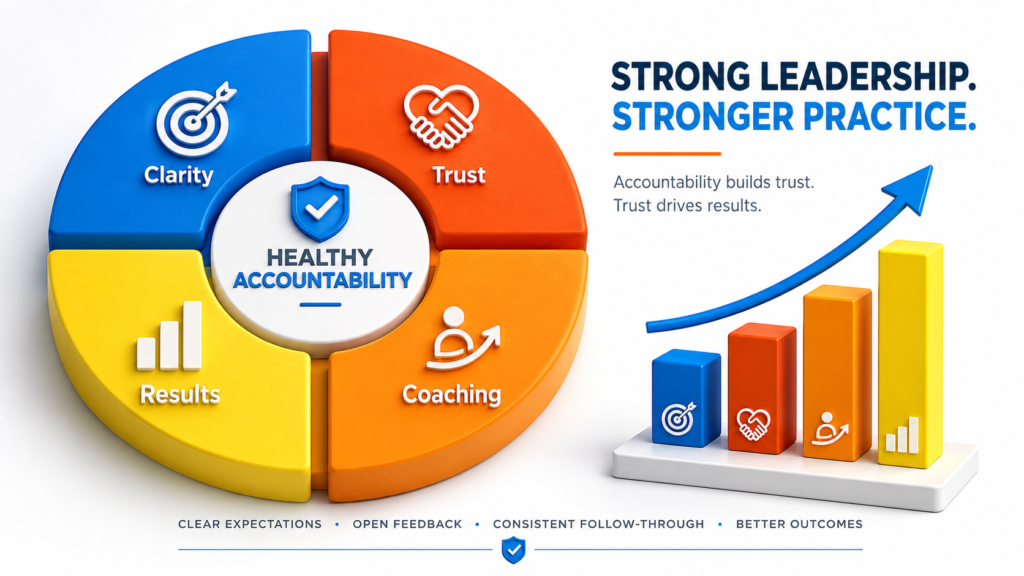
And don’t make accountability something that only happens when things go wrong.
Celebrate the person who followed through.
Recognize the hygienist who improved patient education.
Thank the team member who caught a problem before it became bigger.
Accountability also means noticing when people get it right.
Great Leadership Requires Both Heart and Standards
Dental practices need results.
We need healthy patients, strong systems, productive departments, excellent communication and profitable businesses.
But how we achieve those results matters.
You don’t have to choose between being a compassionate leader and an accountable one.
The best leaders I’ve worked with understand that their people need both.
Clear expectations and genuine support.
Standards and grace.
Honest conversations and respect.
Because leadership isn’t about making people afraid of disappointing you.
It’s about creating an environment where people understand what’s expected, feel safe enough to communicate honestly and are supported in becoming better at what they do.
That’s how we build stronger teams.
That’s how we create sustainable results.