
Communication is one of the most talked-about challenges in dentistry, yet it’s often treated as a symptom rather than the root cause.
When a practice experiences missed handoffs, frustrated team members, scheduling errors, or declining morale, it’s easy to assume the problem lies with individual employees.
More often than not, it doesn’t.
The real issue is how the team communicates with one another.
Poor communication doesn’t just create awkward conversations. It quietly affects every part of your practice, from patient experience to profitability, team retention, and leadership effectiveness.
Communication Is More Than Talking
Many leaders assume communication means sharing information.
Effective communication is making sure information is understood.
A doctor may believe expectations were clearly explained.
A hygienist may walk away with a completely different interpretation.
The front office may think a schedule change has been communicated, while the clinical team has no idea it’s coming.
These small disconnects happen every day.
Individually, they seem minor.
Collectively, they become expensive.

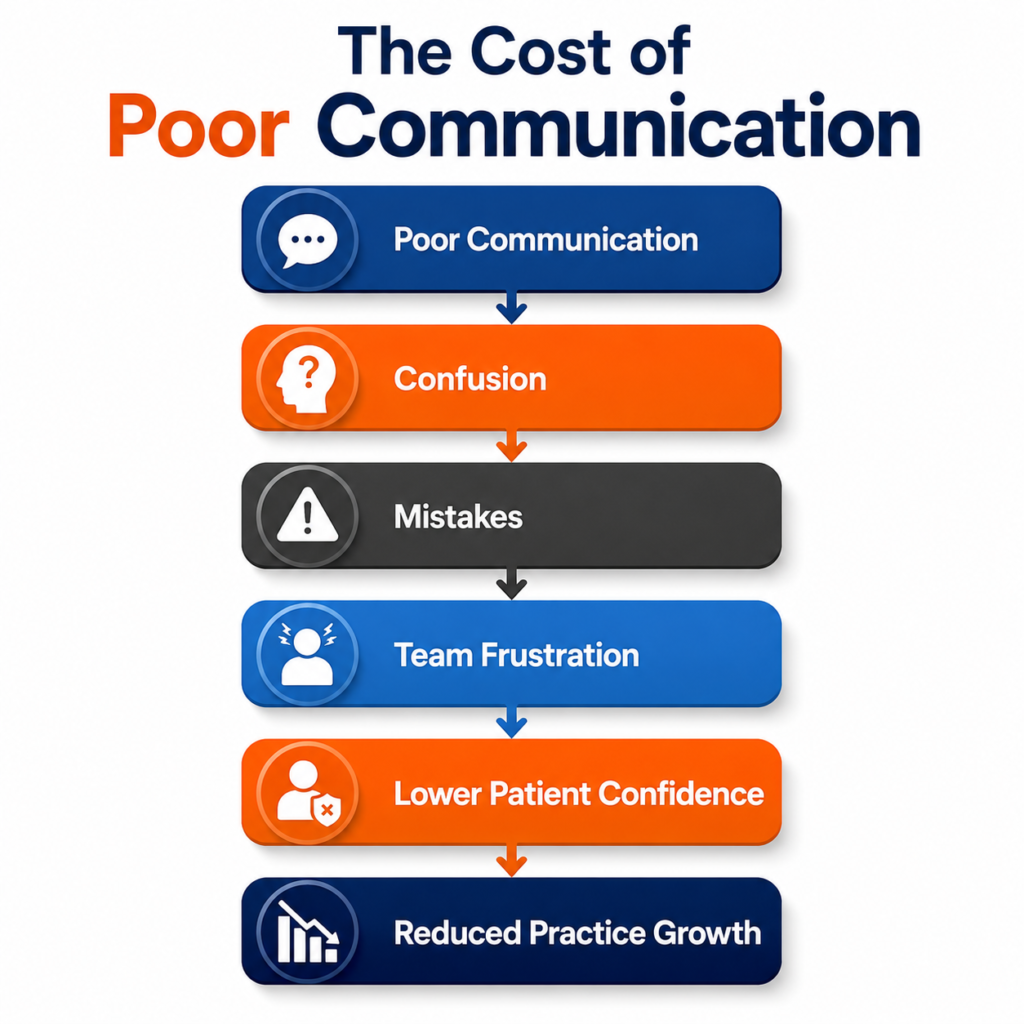
The Hidden Costs Most Practices Never Measure
Poor communication shows up in ways many practices don’t immediately recognize.
It can lead to:
- Misunderstood treatment plans
- Scheduling conflicts and bottlenecks
- Lower treatment acceptance
- Frustrated patients
- Increased stress among team members
- Repeated mistakes
- Reduced accountability
- Higher employee turnover
While none of these issues may seem catastrophic on their own, together they create an environment where people spend more time reacting to problems than preventing them.
Patients Feel It Too
Patients may never witness an internal communication breakdown, but they almost always experience its effects.
Perhaps they’re told different information by two team members.
Maybe an appointment wasn’t scheduled correctly.
Or treatment recommendations aren’t presented consistently.
Every interaction shapes the patient’s confidence in your practice.
When your team communicates clearly and consistently, patients notice.
They feel organized.
They feel cared for.
And they trust your recommendations more readily.
Strong Communication Builds Strong Culture
One of the healthiest indicators of a thriving dental practice isn’t production.
It’s how people talk to one another.
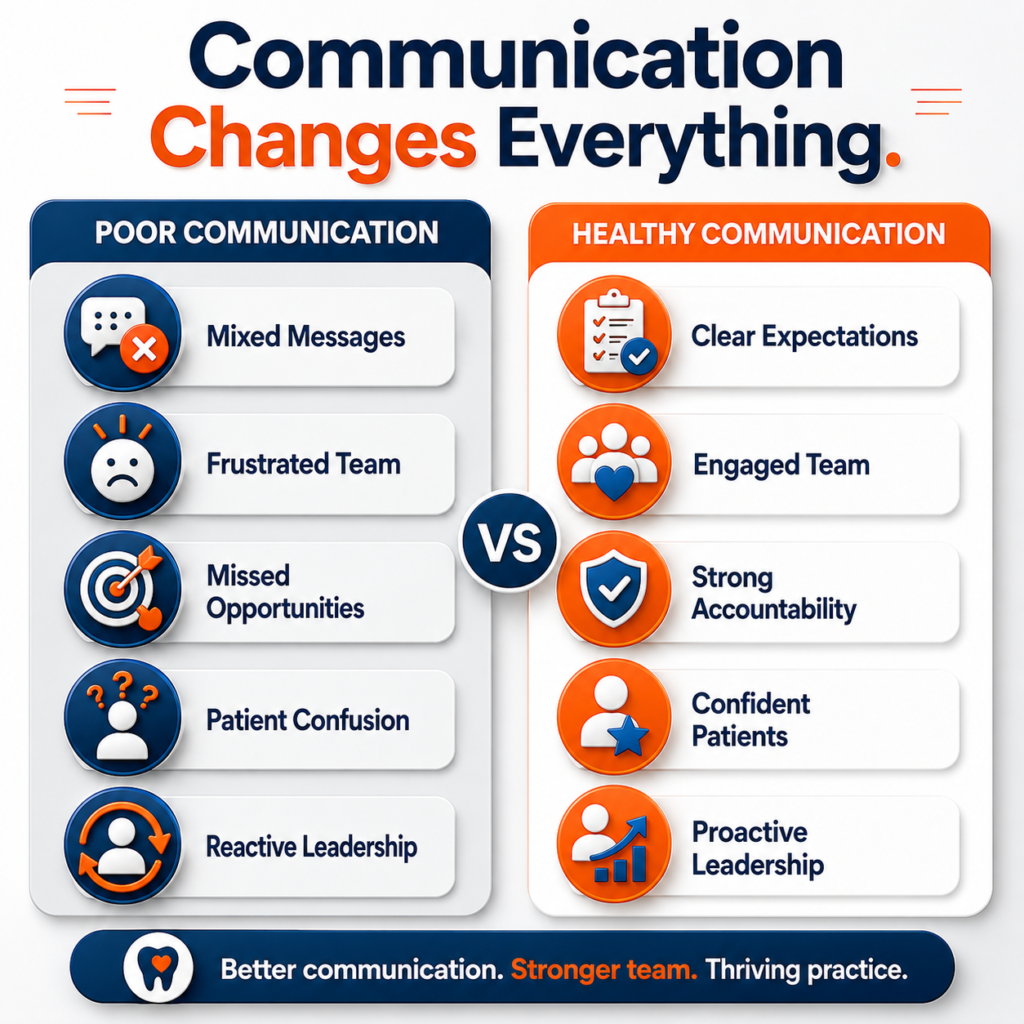
Healthy communication creates:
- Greater trust
- Faster problem-solving
- Higher engagement
- Clearer accountability
- More confident leadership
- Stronger collaboration
Team members feel comfortable asking questions.
Leaders provide feedback without creating fear.
Conflicts are addressed early instead of becoming resentment.
Culture improves because communication improves.
It Starts with Leadership
Communication doesn’t improve because a practice holds another meeting.
It improves when leaders become intentional.
That means taking the time to understand how each team member communicates, processes information, and responds to feedback.
Some employees want detailed instructions.
Others need the big picture first.
Some process information by asking questions.
Others need time to reflect before responding.
Great leaders don’t expect everyone to communicate the same way.
They learn how to communicate with each person more effectively.
Small Changes Create Big Results
Improving communication doesn’t require an entirely new system.
Often, it starts with small, consistent habits.
Hold purposeful morning huddles.
Clarify expectations before assuming understanding.
Encourage questions.
Address misunderstandings early.
Celebrate clear communication just as much as clinical excellence.
Over time, these simple practices create stronger relationships, better teamwork, and a healthier workplace culture.
Most dental practices don’t have a people problem.
They have a communication problem.
The good news is communication is a skill that can be developed.
When leaders intentionally create an environment where people feel heard, understood, and supported, everything else begins to improve.
Better communication leads to stronger relationships.
Stronger relationships build stronger teams.
And stronger teams create exceptional patient experiences.
If communication challenges are holding your practice back, it may be time to look beyond systems and start with your people.
Book a Discovery Call to learn how improving communication can transform your team, strengthen your culture, and create lasting results.